- English
- Español
- Português
- русский
- Français
- 日本語
- Deutsch
- tiếng Việt
- Italiano
- Nederlands
- ภาษาไทย
- Polski
- 한국어
- Svenska
- magyar
- Malay
- বাংলা ভাষার
- Dansk
- Suomi
- हिन्दी
- Pilipino
- Türkçe
- Gaeilge
- العربية
- Indonesia
- Norsk
- تمل
- český
- ελληνικά
- український
- Javanese
- فارسی
- தமிழ்
- తెలుగు
- नेपाली
- Burmese
- български
- ລາວ
- Latine
- Қазақша
- Euskal
- Azərbaycan
- Slovenský jazyk
- Македонски
- Lietuvos
- Eesti Keel
- Română
- Slovenski
- मराठी
- Srpski језик

How to Use 3Pin Rocker Switch?
A 3Pin Rocker Switch is one of the most common electrical components for DIY projects, automotive upgrades, and home appliances. If you’ve ever wondered how to wire, operate, or apply this switch correctly, this guide covers everything you need. Easy to understand and highly practical, it helps both beginners and buyers use the switch safely and confidently.
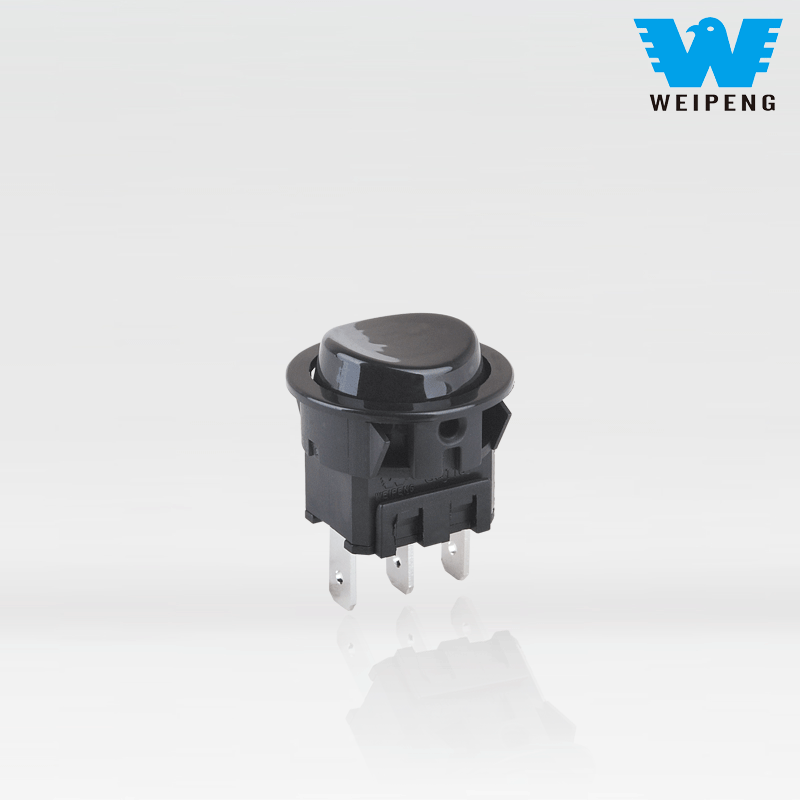
First, let’s explain how to use a 3Pin Rocker Switch. This type is usually a single-pole double-throw (SPDT) control switch with three pins: power input, normally open output, and normally closed output. To use it properly, connect the power source to the middle pin. One side pin activates the load, while the other remains disconnected. When you press the rocker, it switches power between the two output pins smoothly. Always double-check wiring before powering on to avoid short circuits.
The 3Pin Rocker Switch evolved from basic 2-pin models to meet more flexible control needs. As electronics and automotive systems developed, users required a switch that could toggle between two circuits. Over decades, manufacturers improved pin structure, contact materials, and housing durability, making it stable, long-lasting, and widely compatible.
Standard production includes high-quality plastic housing molding, pure copper contact stamping, precision spring assembly, and strict continuity testing. Every step ensures safe performance and consistent switching.
Common applications include car lights, small machinery, control panels, household gadgets, and industrial equipment. Its three-pin design supports more control functions than a 2-pin switch, making it ideal for projects that need simple circuit switching.
For reliable performance, Tongda’s 3Pin Rocker Switch series offers stable contact, clear wiring recognition, and strong compatibility. Built with standard size and durable structure, these switches fit most installation needs and support safe daily use.
In summary, using a 3Pin Rocker Switch is straightforward once you understand pin functions and basic wiring. With simple operation, wide application, and strong durability, it remains a top choice for engineers, buyers, and DIY users. Proper use ensures safety, efficiency, and long service life in any electrical project.
Previous:How Does a 2 Pin Rocker Switch Work?