- English
- Español
- Português
- русский
- Français
- 日本語
- Deutsch
- tiếng Việt
- Italiano
- Nederlands
- ภาษาไทย
- Polski
- 한국어
- Svenska
- magyar
- Malay
- বাংলা ভাষার
- Dansk
- Suomi
- हिन्दी
- Pilipino
- Türkçe
- Gaeilge
- العربية
- Indonesia
- Norsk
- تمل
- český
- ελληνικά
- український
- Javanese
- فارسی
- தமிழ்
- తెలుగు
- नेपाली
- Burmese
- български
- ລາວ
- Latine
- Қазақша
- Euskal
- Azərbaycan
- Slovenský jazyk
- Македонски
- Lietuvos
- Eesti Keel
- Română
- Slovenski
- मराठी
- Srpski језик

NC Micro Switch: The Definitive Manual for Knowing, Choosing, and Operating NC Micro Switches
People who are involved in electronics, industrial automation, and the DIY community know micro switches; the lesser-known champions of control circuits. One type of micro switch is the NC micro switch (Normal Closed micro switch), which is extremely important. If figuring out how to identify an NC switch, its application, or finding the right NC for your project is on your mind, this guide has all the answers to NC micro switches, its distinction from NO micro switches, and its applications.
What Is an NC Micro Switch?
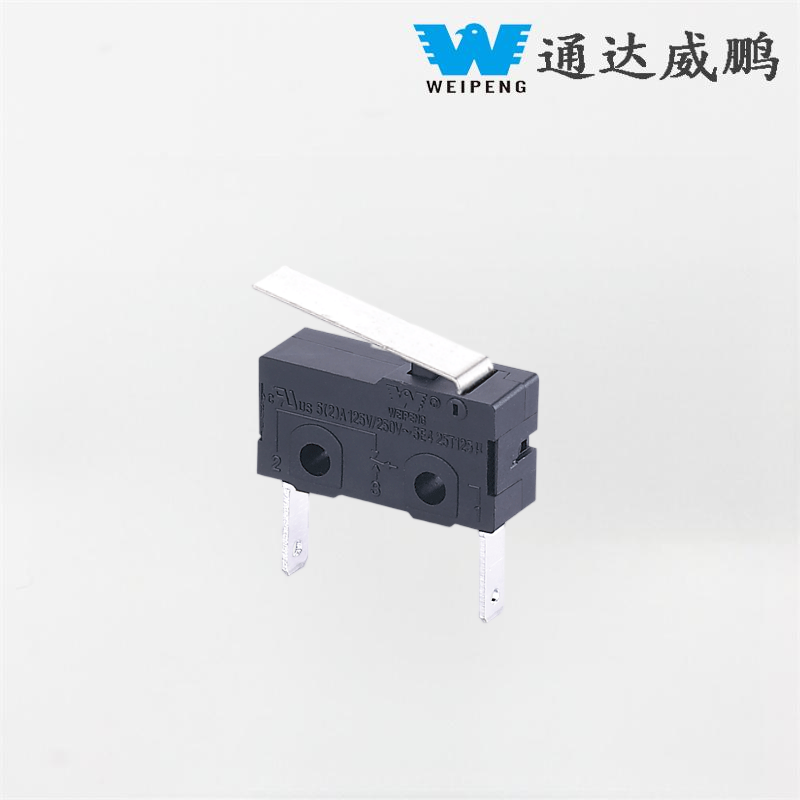
A NC microswitch, or a Normally Closed microswitch, is an electrical switch that stays in its closed position, letting electricity flow until it is triggered. Then the switch opens and stops the current flow in the circuit. This is contrary to an NO (Normally Open) microswitch, which is open before being triggered and closes afterward. There are other terms used for microswitches and one of them is snap-action switches because of their quick switching movements.
In working mode, when the actuator is not in action, the contacts are in contact and current is flowing through. Once the actuator is activated, the contacts open, breaking the flow of the current. These types of NC microswitches become necessary in circuits for securing the emergency stop, safety missions, and the ones requiring feedback.
How Does an NC Micro Switch Work?
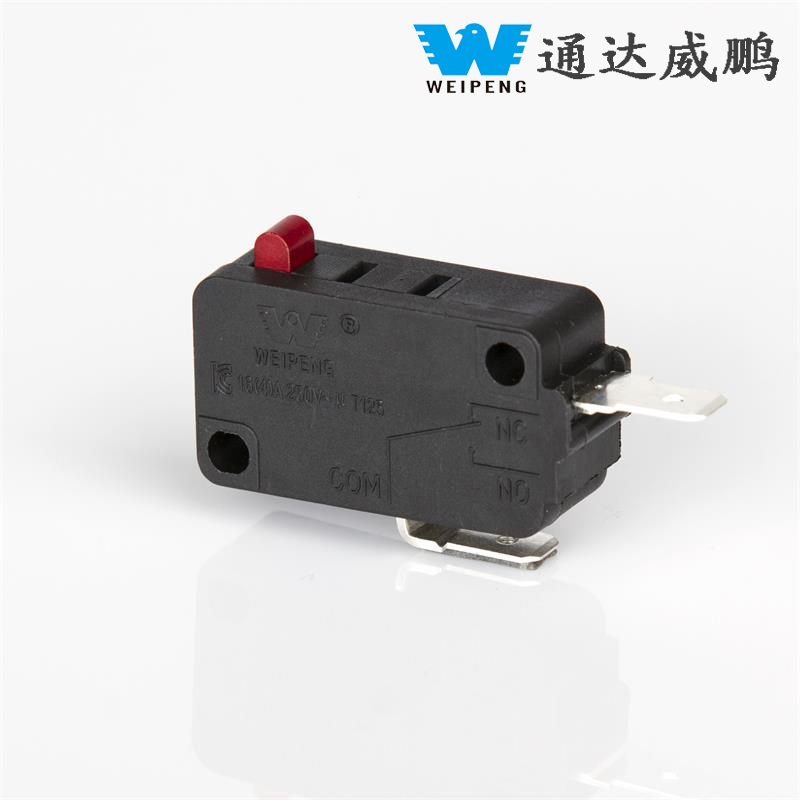
Micro switches are powered by a system that allows them to produce a fast and definite actuating motion. Inside the switch is a mechanism of spring-loaded push button. By pushing down the actuator, a “snap” occurs and the position of the contacts is altered.
For an NC micro switch:
- When the actuator is not in motion, the COM terminal is connected to the NC terminal.
- Pressing the actuator breaks the COM-NC connection, opening the circuit.
This principle has applications that are innumerable; these include everything from safety interlocks in appliances and controls for industrial machines to elevator doors and vending machines.
How to Tell If a Switch Is NC or NO?
Knowing if a micro switch is NC or NO is an important aspect of circuit development and maintenance. Here are some methods to identify the type:
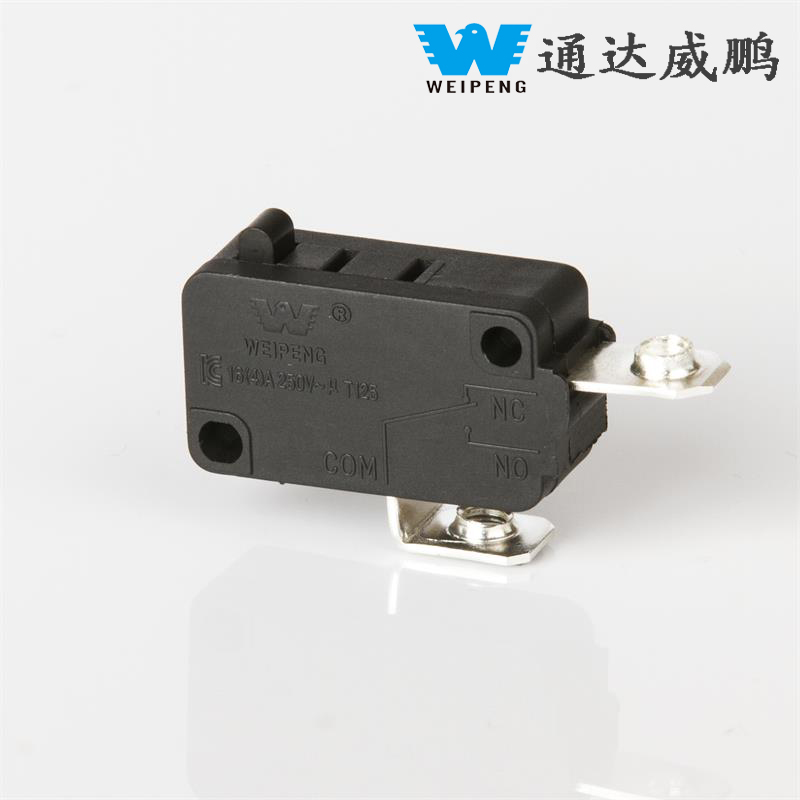
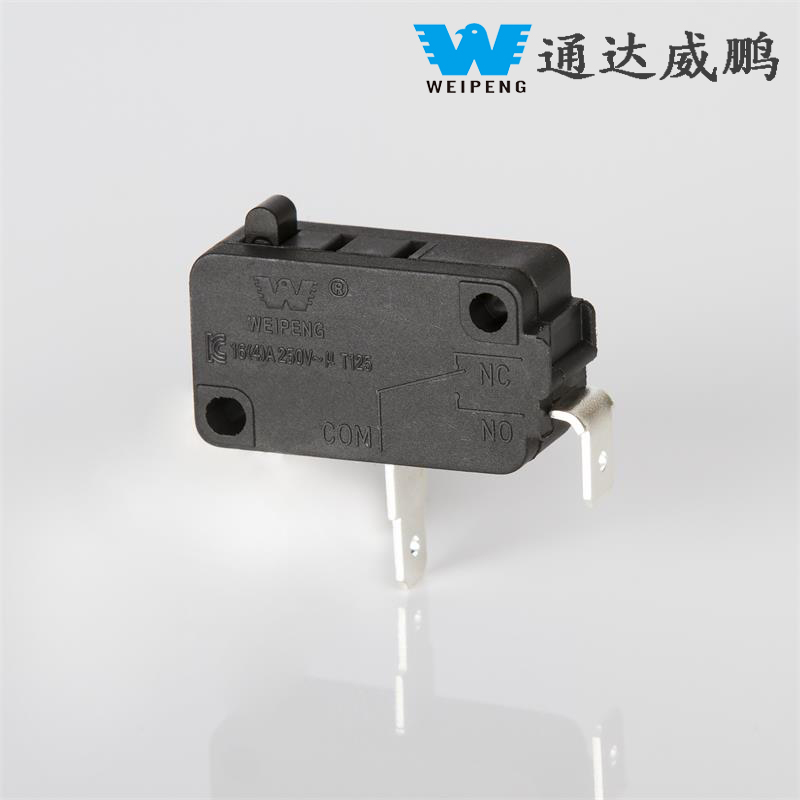
Visual Inspection: "NC" (Normally Closed) and "NO" (Normally Open) are the labels typically found on a number of micro switches. Be sure to examine the housing of the switch for its labeling.
Testing with a Multimeter: Adjust your multimeter to continuity (or ohm) mode. Put one lead in point COM and the second lead to the suspected NC point. The multimeter should indicate continuity without pressing the actuator. While pressing the actuator, continuity should be broken.
Manufacturer’s Datasheet: When the datasheet is being seen, the terminals will reveal if they are NC, NO, and COM and also some other specifications.
Taking these steps ensures you accurately identify and connect the right switch for your circuit.
Common Applications of NC Micro Switches
The NC microswitch is present in an infinite number of applications where security and immediate action are paramount.
1. Safety Mechanisms: NC micro switches are used as fail-safe elements in industrial machines and household appliances. For example, the NC switch will turn off the circuit when a door or cover is opened, and the machine will stop working, hence preventing accidents.
2. Emergency Stop Systems: Emergency stop buttons typically operate with NC micro switches. When the emergency stop button is pressed, a circuit is opened, thereby halting the equipment immediately.
3. Security Systems: The NC micro switch is an instrument utilized in tamper switches designed for alarm systems and activates the alarm upon the intrusion of a door or window.
4. Automotive Applications: Within vehicles, NC micro switches make the engagement of the brake pedal possible leading to the operation of the brake lights or stopping the operation of cruise control.
5. Elevators and Access Control: NC micro switches in elevator doors are responsible for detecting door closure. Unless the doors are completely shut, the elevator will not run.
These cases exhibit the importance of NC micro switches in accomplishing operational safety and system reliability.
Comparing NC and NO Micro Switches
Recognizing the distinction between NC micro switches and NO micro switches is crucial in ensuring the appropriate design of circuits and problem-solving.
NC (Normally Closed): By default, the circuit remains closed and is opened by actuation. Is usually employed where breaking the circuit signifies a change in status or provides an alert, especially in safety-related applications.
NO (Normally Open): The default state of the switch is “off” and must be activated to close the circuit. The switch can be used for activating devices and alarms, for instance, by pushing a button to switch on a lamp.
The decision to use either NC or NO will depend on the application. NC is better suited for monitoring the usual disturbances while NO should be selected for cases where an action needs to be initiated when there is a change.
How to Choose the Right NC Micro Switch?
When faced with a plethora of brands and products, it is necessary to keep in mind several things to pick the right NC micro switch.
1. Electrical Ratings: Ensure that any micro- switches you choose match the voltage and current requirements of your system, as there are many variants to choose from.
2. Actuation Force: Micro switches have different force requirements for actuation. Choose according to sensitivity requirements and if lower forces are needed for gentle applications while higher force options may be essential for stiff uses.
3. Terminal Style: You can choose from quick-connect, solder lug, and screw terminals. Make your choice based on ease of installation and compatibility with wiring.
4. Environmental Conditions: Think about protective measures against dust, humidity, and other environmental conditions. If the application is outdoors or in difficult conditions, choose IP-rated or sealed microswitches.
5. Size and Mounting Options: Micro switches are available in various dimensions and designs with distinct holes and brackets. Check for the correct size matching your application area.
Researching and ensuring these aspects of quality will help guarantee success and smooth performance in your project.
Installing and Wiring an NC Micro Switch
Practical installation ensures that your NC microswitch works as designed and can achieve optimal durability. Here are some practical recommendations:
1. Mounting the Switch: Use the mounting holes or brackets provided to fix the micro switch in its position. Do so with care so as not to exert pressure which might harm its casing or influence its ability to work.
2. Wiring: The common terminal must be connected with the input of the circuit, and the NC terminal must be connected to the output which needs to be interrupted. Confirm if wiring and polarity are correct before turning on power.
3. Testing: Upon installation, check the switch with either a multimeter or by getting the device to do something. Activate the switch to track if the circuit opens.
4. Maintenance: Regularly check for signs of wear, dirt or corrosion. If needed, clean the contacts, and replace the switches in order to avoid any false signals or interruptions in service.
Following these steps ensures your system remains safe and performs optimally.
Benefits and Limitations of NC Micro Switches
NC micro switches stand out for their reliability and rapid response, but there are considerations:
Benefits:
The snap mechanism’s quick reaction greatly enhances reliability and prevents false signals from occurring. Its compact design allows for use in narrow spaces. NC micro switches also have high levels of durability—they are usually tested for millions of cycles, thus being great for applications that require high safety standards and involve repetitive movements.
Limitations:
NC micro switches are typically resilient but may experience wear or malfunction caused by electrical interference. Proper placement and installation of these switches at the right angles is essential for effective use since obstructions may hamper their operation. They also require proper environmental sealing in adverse conditions, so dirt and moisture cannot penetrate them.
By balancing these factors, you can suitably leverage NC micro switches in your system designs.
Top NC Micro Switch Brands and Where to Buy
The quality affects both durability and reliability. Some well-known brands of NC micro switches include Omron, Honeywell, Cherry, and Schneider Electric. Each brand produces different models that suit different voltages, actuator types, and environmental protection levels.
You can acquire NC microswitches through reliable electronic suppliers such as Mouser, Digi-Key, and RS Components or Amazon if you are planning for home-based DIY projects. Make sure you that you read product specifications and reviews carefully while selecting the right microswitches for your requirements.
Frequently Asked Questions About NC Micro Switches
What is the difference between an NC and a NO switch?
The basic difference is found in the default position. A NC switch is actually in a closed position and therefore allows current to flow on its own when not being used. But pushing the switch opens the circuit and stops the current flow. On the other hand, an NO switch is open at the start. When the switch is pressed, it actually closes the circuit allowing the current to run through.
Can one micro switch contain both NC and NO terminals?
Several Micro Switches feature 3 terminals, COM, NC, and NO. Functionality can be based on the wiring, and either one of the functions or both ways can be used in a circuit.
Are NC micro switches suitable for safety circuits?
Definitely. They are typically closed when inactive, which means that any action taken to open them (for example, opening a door or pressing an emergency button) would cause the circuit to be interrupted promptly.
How long do NC micro switches last?
When used properly and selected with care, NC micro switches can last millions of cycles. Proper maintenance and environmental protection also contribute to their longevity.
What happens if I connect the wrong terminal?
Incorrect wiring (like connecting NO instead of NC) will lead to the malfunction of your equipment or other protective measures. Always check the terminals beforehand.
Are NC micro switches easy to install?
Indeed, many of them follow the plug-and-play process, with minimum need for any technical wiring skills. Being small in size, they can be easily installed with the right fittings.
Advanced Applications and Integration Tips
As technological advancements continue, NC micro switches have begun to get utilized in more complicated systems. In industrial automation, they perform crucial duties with respect to sequence control and feedback loops. Also, NC micro switches are frequently used as limit switches in robotics with the aim of detecting positions and avoiding over traveling.
With regards to IoT ventures, combining NC micro switches and microcontrollers enables remote supervision plus automatic notifications. In smart home systems, NC micro switches provide help in automating the process of security and access system thus sending instant alerts about access or emergency situations.
In the design of embedded systems, it is advisable to use debounce techniques to avoid any false activation of switches when mechanical disturbances are present. Choose switches that are more durable for applications requiring repetitive use and ones that operate at high frequency.
NC Micro Switch Maintenance and Troubleshooting
If you experience failure or intermittent operation, follow these troubleshooting steps:
1. Inspect Physical Damage: Check for cracks or actuator misalignment. Replace damaged switches immediately.
2. Clean Contacts: Dust or rust buildup will prevent the current from passing through. Employ proper contact cleaning agents and check that the connections are tight.
3. Test Switch Functionality: Check continuity between the common terminal and the normally closed terminal using a multimeter. If the switch does not switch reliably, replace it.
4. Evaluate Circuit Design: You must ensure the wiring done according to the device data sheets. Make sure the switch corresponds to the voltage specifications as well as the current ratings.
By regularly maintaining and testing, you maximize reliability and prevent system downtime.
Micro switches are integral elements for the development of effective and safe control systems in various sectors of the economy. Their normal closed operation mode, convenience in installation, and versatility give them an advantage over other types of switches of the same class, which is why everyone engaged in engineering, amateur, and product design will find them useful. Knowing how to choose, install, maintain, and troubleshoot NC switches will help one achieve success in any ventures. In case of complex troubleshooting or installation processes, one should consult the manufacturer’s datasheets or refer to more experienced professionals.