- English
- Español
- Português
- русский
- Français
- 日本語
- Deutsch
- tiếng Việt
- Italiano
- Nederlands
- ภาษาไทย
- Polski
- 한국어
- Svenska
- magyar
- Malay
- বাংলা ভাষার
- Dansk
- Suomi
- हिन्दी
- Pilipino
- Türkçe
- Gaeilge
- العربية
- Indonesia
- Norsk
- تمل
- český
- ελληνικά
- український
- Javanese
- فارسی
- தமிழ்
- తెలుగు
- नेपाली
- Burmese
- български
- ລາວ
- Latine
- Қазақша
- Euskal
- Azərbaycan
- Slovenský jazyk
- Македонски
- Lietuvos
- Eesti Keel
- Română
- Slovenski
- मराठी
- Srpski језик

Rocker Switch On Off Position: The Complete Guide for Beginners and Experts
Understanding the on-off position of the rocker switch is a very important factor for the professionals and the amateurs dealing with electrical or electronic devices. The rocker switch is in use in various ways in various places, such as in household products, in car dashboards, in computer equipment, in power strips, and in factories. If you are interested in the methods of determining whether the rocker switch is working or not, as well as getting to know its construction, functioning, and failure, then you will definitely find the answers in this manual.
What Is a Rocker Switch?
A rocker switch is an electrical switch that rocks when pressed, rather than moving vertically. The rocking also either completes or breaks the circuit and controls electric current. Rocker switches became popular among engineers. They are strong, easy to use, and reliable. There are many kinds of rocker switches in terms of designs, shapes, and sizes, but their primary role remains the same: to switch on and off reliably.
Identifying the On and Off Position of a Rocker Switch
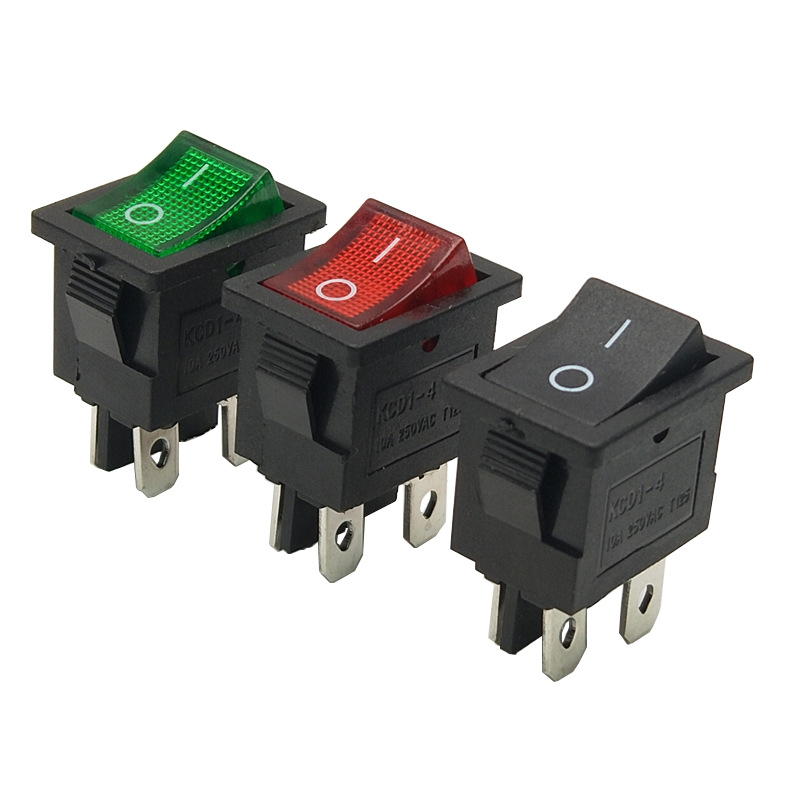
Upon joining the world of rocker switches, one of the first queries that come to mind is: How does one figure out whether the switch is turned on or off? The industry has simplified the task by coming up with some general indicators. Find international symbols printed on the switch’s front or embossed onto it.
I = ON
O = OFF
Shifting the switch in the direction of the marking, which states "I," will complete the electrical circuit in question and turn the device on. If the switch is turned in the direction of the marking "O", the connection is interrupted and the device will stop working. Thanks to such simple signs, safety can be guaranteed. In some situations, color values may be used reading red color for "ON" and black or white color for "OFF".
Common Configurations of Rocker Switches
Rocker switches come in multiple configurations: single pole single throw (SPST), double pole single throw (DPST), single pole double throw (SPDT), and double pole double throw (DPDT). The configuration chosen indicates how many circuits the rocker switch can operate. Besides, it reveals whether the switch can perform its function in many positions.
Standardly, the on-off function pertains to the SPST design, in which the one end turns the power source on (ON) and the other end turns it off (OFF). However, types of DPDT or SPDT switches can include more positions for switching direction or making different connections in the circuit. Being aware of the design of your rocker switch helps in connecting and using it correctly.
Applications of Rocker Switches and Their On/Off Positions
Due to their convenient design and simplicity of use, rocker switches are found in numerous devices. Here are the main applications where proper identification of on and off position is important:
Household Appliances: In the case of coffee machines, water coolers, hoovers, and fans, rocker switches have been preferred due to their ease of usage.
Automotive: Rocker switch position is everything when it comes to controlling the dashboard, the windows, adjusting and lighting.
Industrial: Heavy machinery has always relied on clearly marked and dependable switchations.
Electronics and Computers: It goes without saying that electrical strips, displays, and chassis make use of rocker switches to avoid any problems with power and management.
Understanding the information about the rocker switch is crucial for smooth and safe operation of devices as the examples given illustrate. Physical position as well as understanding the meaning of symbols helps prevent unintentional starting and/or stopping of devices that might result in damage or injuries.
Visual and Physical Cues for On-Off Position
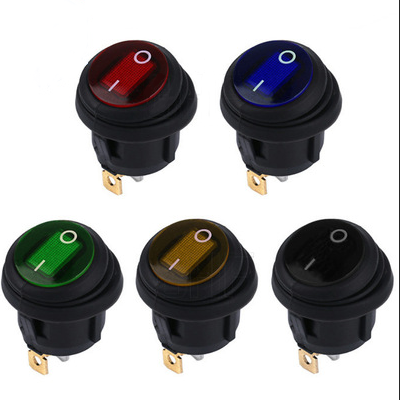
Apart from the basic “I” and “O” symbols, rocker switches may also include different visual and tactile signals so that users are able to quickly understand its state. Some switches have illuminated marks where a neon bulb or an LED is switched on when the switch itself is switched on. In addition, there are switches with tactile indicators which can have a rugged edge or a dual hollow surface to enable feeling of the on and off sides
The physical characteristics of the switch also provide valuable information. In most cases, the “ON” setting entails transferring the switch toward the operator, while the “OFF” position means rotating the switch in the opposite direction. In devices mounted on panels, there may be an option to maintain a standardized placement of the switch so that “ON” is located at the upper part or near the user, according to certain regulations.
How to Install and Wire a Rocker Switch for Correct On-Off Function
Correctly setting up the rocker switch ensures the intended working of the switch's on and off status. The process is as follows:
Step 1: Identify the Switch Type
To find out which switch you are using, determine if it is an SPST, DPST, SPDT, or DPDT switch because it will determine your wiring connections.
Step 2: Find the “I” and “O” Symbols
When placing the switch in the mount, ensure that “I” is facing the appropriate side.
Step 3: Connect the Terminals
Wiring is usually just a matter of connecting the power source to the “live” terminal and connecting the appliance to the “load” terminal as specified by your manufacturer’s instruction.
Step 4: Run Tests on the Switch
Once you have finished connecting the switch, do a check to make sure that the switch turns your device on by pressing “I” and that “O” turns it off.
Installing the rocker switch in a wrong manner can cause the on/off function to be reversed which can be confusing as well as dangerous. If you are not sure how the installation works, it is good to contact a qualified electrician and ask for help with understanding the wiring diagrams given by the manufacturer of the switch.
Safety Considerations with Rocker Switches
Safety is of utmost importance when it comes to electric controls. Here are a few best practices to be followed for finding the on-off position of rocker switches:
Clear Markings: Be sure to clearly mark your switches with the letters "I" and "O," or use stickers if necessary. Consistency: When installing switches, make sure that the on/off orientation is consistent with how it is installed on other devices or panels. Avoid Accidental Switching: Avoid using switches that do not have guards, covers, or locking mechanics since it can be dangerous in industrial and crowded workplaces. Periodic Service: Regularly check the switches for signs of wear and tear, faded markings or any other defective elements that may cause malfunctions.
By implementing these safety measures, you make sure that not only you but others, too, will be able to determine the rocker switch on-off position and avoid any possible electrical problems.
Frequently Asked Questions
How to tell if a switch is in the on or off position?The majority of rocker switches employ common graphic signals: “I” indicates that the actuator is performing an ON function, while “O” indicates that it is performing an OFF function. The “I” side is that which makes the circuit complete, while the “O” side disconnects it. In instances where no signals are provided, refer to the manufacturer’s manual. In addition, sometimes the switches may be lit up when in ON position or positioned in such a way that the side pushed towards the user is in ON position. A simple test conducted by toggling the switches may also be performed for the determination of its position.
Are all rocker switches illuminated when ON?Illumination does not exist in all rocker switches. While illuminated switches help somewhat when the environment is dark, a regular switch may only utilize marking or feel.
Can I install a rocker switch on my own?Yes, if you observe the correct wiring procedure and safety standards. Ensure you check the specifications of the switch and refer to the wiring diagrams to confirm that it is oriented correctly and works properly.
What happens if the switch is installed backwards?If installed incorrectly, the rocker switch may work the opposite way - when the "O" side is pressed, it may lead to the device being turned on causing confusion and posing danger. One should control the orientation the right way and check the switch functionality after installing it.
Are rocker switches suitable for high-current devices?There are quite a few rocker switches that can work with high-voltage and high-current applications perfectly fine; however, it is always advisable to ensure that the ratings are sufficient for your application. Using a switch with insufficient ratings can cause excessive heat generation or malfunctions.
Troubleshooting Rocker Switch On-Off Issues
While some machines that feature rocker-type switches do not respond appropriately to changes to their status. Troubleshooting the switch’s on and off function involves investigating both the switch and the circuit:
- To start with, check visual indicators like the symbols "I"/"O" along with the light indicators so as to establish location.
- After that, turn off electricity and check the switch for any wear and tear, rust, or mechanical breakdowns. The rocking function/part should operate easily without any malfunction.
- Use a continuity tester or a multimeter to check that the switch successfully creates a circuit while being turned to the "I" position and interrupts it while in "O."
- If there are several switches, ensure their uniform installation and compliance with the wiring scheme.
If a switch has stopped functioning, it may be necessary to change the switch. When replacing switches, be sure to make use of switches with the original specs as much as possible, especially when it comes to voltage and current requirements.
Alternatives to Rocker Switches for On-Off Control
Though rocker switches are among the most popular switch types these days, they aren't the only option available for the on-off functionality. Other switch types include toggle switches, push-button switches, rotary switches, and slide switches. All of these types of switches possess distinct designs and features. To illustrate, toggle switches have a lever mechanism that pulls the switch from one position to another while push-button switches are activated by pressing and releasing a button. The selection of the type of switch depends on what the specific application requires in terms of durability, ergonomics, or aesthetic looks.
Maintaining and Replacing Rocker Switches
Maintaining your rocker switch is necessary to ensure its dependability regarding the on-off position. Use caution when cleaning the switch, as the presence of dirt and moisture can interfere with the markings. If your rocker switch starts to feel sticky, show signs of malfunction, or has become damaged, replacing it is usually the appropriate reaction. The replacement should correspond with respect to current rating, voltage, and physical dimensions. Use the same wiring and orientation methods as discussed previously.
Selecting the Best Rocker Switch for Your Application
When selecting a rocker switch, it is essential to ensure that the switch’s ratings are suitable for the electrical needs of the device. Ideally, one should look for rocker switches that feature clear markings indicating the on and off operation of the switch, are made using durable materials, and are easy to operate. If the switch is to be used in an environment where visibility is paramount, illuminated switches are the best option. High current devices should utilize switches which feature top-grade contacts and insulation. Assess the design of the switch carefully to make sure that users are aware of whether the rocker switch is in on or off position at all times, thus avoiding any mistakes.
So, to sum up, to master rocker switches in the on-off position means to understand symbols, physical cues, wiring, usage, and safety. By choosing, installing, and maintaining rocker switches carefully, you will make sure that your electrical devices are safe to operate. It does not matter if you are a technician, engineer, hobbyist, or just controlling home appliances; you can use this guide to deal with rocker switches, as well as solve common problems.
Previous:Micro Pressure Switch Manufacturer