- English
- Español
- Português
- русский
- Français
- 日本語
- Deutsch
- tiếng Việt
- Italiano
- Nederlands
- ภาษาไทย
- Polski
- 한국어
- Svenska
- magyar
- Malay
- বাংলা ভাষার
- Dansk
- Suomi
- हिन्दी
- Pilipino
- Türkçe
- Gaeilge
- العربية
- Indonesia
- Norsk
- تمل
- český
- ελληνικά
- український
- Javanese
- فارسی
- தமிழ்
- తెలుగు
- नेपाली
- Burmese
- български
- ລາວ
- Latine
- Қазақша
- Euskal
- Azərbaycan
- Slovenský jazyk
- Македонски
- Lietuvos
- Eesti Keel
- Română
- Slovenski
- मराठी
- Srpski језик

Rice Cooker Micro Switch – WEIPENG: Function, Connection, Selection, and Replacement Guide
The Rice Cooker Micro Switch does not seem to be a significant component but it plays a major role in the operations of a rice cooker. This kind of micro switch may easily affect the heat efficiency of a rice cooker, the automatic temperature control function, as well as the safety of users. Choosing the right Rice Cooker Micro Switch is very important according to rice cooker manufacturers, repair specialists, and appliance parts buyers.
The WEIPENG micro switches are extensively used in small home appliances as they provide consistent contact function, compact dimensions, and various terminal configurations. For example if you need to find a switch for replacement in your rice cooker or look for components of your new appliance production line, knowledge on ratings, actuators, connections, and operating conditions will aid you in making the right selection.
How Does a Micro Switch Work in a Rice Cooker?
In a rice cooker, the micro switch is likely to form part of the temperature control and precautionary system of this tool. It is typically found close to the heat sensor, the cooking lever, heating plate, as well as the internal control unit. The switch is triggered either by the position of the cooking lever or by the movement of the thermostat assembly while the rice cooker starts cooking.
Heat is used to heat a cooking plate. While water is present, the temperature remains near the boiling point. Once the water evaporates or is absorbed, the temperature of the bottom of the pot rises quickly. The thermostat monitors this change and activates the mechanical system. The micro switch cuts off the cooking circuit or switches the appliance to “Warm” mode.
The performance of the switch can be regarded as a reliable and swift electrical response. It achieves this with the help of the snap-action contact technique which enables the switch to open or close the circuit in no time.
Why the Rice Cooker Micro Switch Matters
The micro switch might be cheaper than the heating plate or the electronic control board, but it is of paramount importance in the functioning of the appliance. The substandard switch can either lead to inconsistent heating, stuck cook button, inability to hold warm, electrical shorting or some inevitable malfunction after continuous usage.
A reliable Rice Cooker Micro Switch can enhance consistency in production and lower the number of warranty claims for producers. For repair shops, the correct rating and terminal configuration of the switch ensure that the appliance works as required. In terms of end users, it ensures safer and easier cooking experience.
Common Rice Cooker Micro Switch Specifications
Prior to buying a micro switch, it’s important for the buyer to examine the markings of the existing component and to find an equivalent replacement. Even two switches that may seem similar on the surface may still have different pin arrangements or electrical ratings.
The most important specifications usually include:
- Electrical rating, such as 5A, 10A, 16A, or higher at 125VAC or 250VAC
- Contact form, including SPDT, SPST normally open, or SPST normally closed
- Terminal type, such as solder terminals, quick-connect tabs, screw terminals, or wire leads
- Actuator design, including pin plunger, lever, roller lever, or push-button style
- Operating force and release force
- Mounting hole spacing and overall body dimensions
- Temperature resistance and insulation requirements
- Expected mechanical and electrical life cycles
Rice cookers usually run on mains power, hence a switch should be chosen accordingly to the given electrical design and load. Any switch should not be chosen based only on its look. A switch with improper current ratings will most likely overheat, bond the contacts together, or malfunction in other ways.
Rice Cooker Micro Switch Connection: What Buyers Need to Know
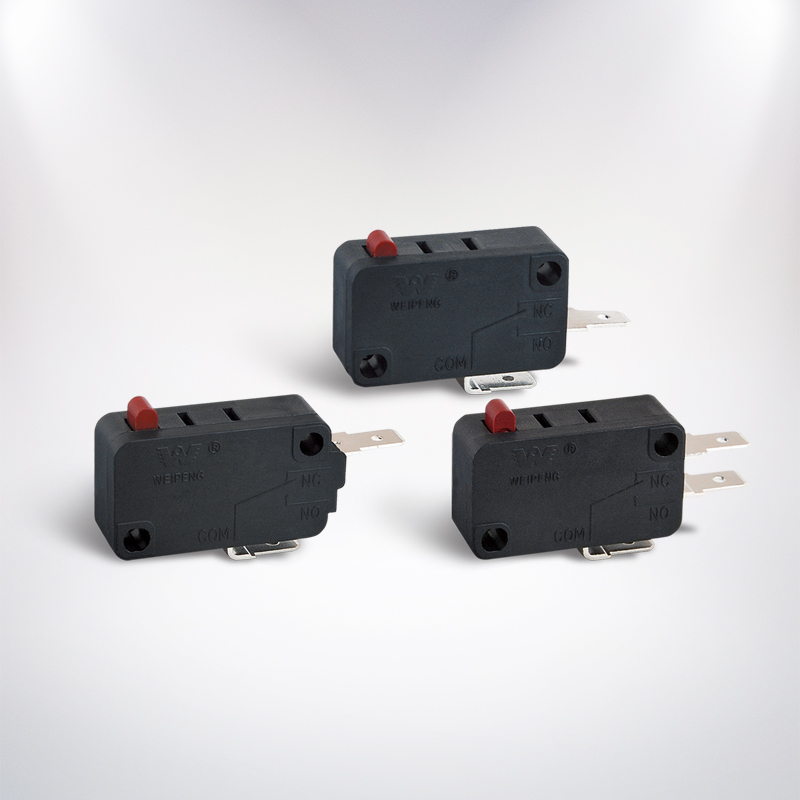
Properly connecting the micro switch in the rice cooker is important. Most micro switches have three terminals, namely COM, NO, and NC.
- COM means common terminal.
- NO means normally open; the circuit closes when the switch is pressed or activated.
- NC means normally closed; the circuit opens when the switch is pressed or activated.
The types of circuits used in appliances may vary depending on the switch applied in making the connection. The switch may be a device that completes the circuit when pressed, gets to the point of disconnecting power at a particular point of mechanical motion, or signals a transition mode in cooking. Some rice cookers utilize a micro switch together with a bimetal thermostat, thermal fuse, indicator light, relay, or electronic control board.
It is essential to take a picture of the wires or note down their nature before unscrewing the damaged component. The terminal configuration should be checked using the appliance or service documentation or a continuity test with power shut down. Since rice cookers involve main voltage, only a competent technician or someone with adequate expertise in electrical repairs should carry out repairs.
Signs That a Rice Cooker Micro Switch May Be Faulty
An external damage of micro switch does not necessarily reflect any internal malfunctioning. This means the micro switch contacts can wear, weaken, oxidize, or even become stuck. The signs of a problematic micro switch include: a rice cooker that does not work, a cook lever that does not keep the position, a rice cooker that remains in active cooking for too long, or a cooker that does not switch to warm mode.
The normal functioning of the device may show some signs which may involve problems with performance troubleshooting issues. Such signs include the absence of heating, random clicks, smell of burn around the switch, showings of heat around terminals, etc. Headers should also be checked for problems such as fault in the thermostat, heater coil, fuse, etc.
WEIPENG Micro Switches for Rice Cooker Applications
WEIPENG is known to be a skilled producer of micro switch products with a wide range of applications from home appliance to electronic products and various support services. Rice cooker applications of the WEIPENG micro switches are widely recognized due to the compact design, reliable operational functions, variety of terminals made available, and different options provided for actuators.
WEIPENG switches come in various specifications catering to a variety of current ratings and installation specifications, making them suitable for a large number of devices including household rice cookers, commercial food warmers, multi-cookers, electric pressure cookers, and several other heating appliances. Consumers are cautioned against making their choice solely on the brand. The selection of a WEIPENG model depends on the type of electrical wiring, load current, and switching function of the appliance.
Yueqing Tongda Wire Electric Factory is a reputable manufacturer of WEIPENG-switching products. The factory is knowledgeable about micro switches and similar electrical components and can meet the needs of clients requiring quality, OEM solutions, terminal customization, and wholesale supplies for home appliance manufacturing or repair purposes.
Comparison of Common Micro Switch Brands and Manufacturers
Different brands serve different market requirements. High-performance global brands are usually chosen for upper-end devices and applications that need a lot of certification, while specialist manufacturers from China provide best value-for-money services.
| Brand or Manufacturer Type | Typical Advantages | Price Level | Suitable Applications |
|---|---|---|---|
| WEIPENG | Flexible specifications, competitive cost, appliance-focused options, OEM support | Competitive to mid-range | Rice cookers, kitchen appliances, replacement parts, volume production |
| OMRON | Strong global reputation, consistent quality, broad product documentation | Mid-range to premium | High-end appliances, industrial controls, export-oriented products |
| Honeywell | Robust engineering, established reliability, broad industrial presence | Premium | Demanding electrical and industrial applications |
| Zippy or Similar Appliance Switch Suppliers | Compact switch designs, appliance compatibility, broad model availability | Mid-range | Consumer appliances and control mechanisms |
| Generic Aftermarket Suppliers | Low initial purchase cost and easy availability | Low | Basic repairs where specifications are carefully verified |
The cost of micro switches depends on many criteria such as rating, certification requirements, order quantity, terminal type, and custom tooling. While bulk purchases may yield prices within the range of 1-2 dollars per switch for standard micro switches, certified and high current switches, custom actuator switches, or switches from recognizable brands may reach the numbers of hundreds of dollars per unit. Note that the cheapest part may not always be the best option especially if it risks quality and installation difficulties.
How to Choose the Right Micro Switch for a Rice Cooker
Initially, take down the details of the original switch such as model number, electrical specifications, contact arrangement, terminals direction, installation dimensions, and actuator type. After that, measure the new component device properly. If the marking of the original device is not clear, refer to the schematic and get in touch with authority on the device or the supplier.
When designing a rice cooker, it is important for engineers to estimate the anticipated electrical load and include an adequate safety margin. Considerations while performing such an estimation include inrush current, heating element parameters, environmental temperature inside the appliance, operational frequency, and certification specifications for the specific market. A good switch must function properly in the entire life cycle of the appliance.
It is also important for the buyers to find out if the switch requires any certifications such as UL, CUL, ENEC, VDE, CE-related compliance support, RoHS, or REACH documentation according to the sales market and category of the goods concerned. The need for the above certifications should be checked beforehand.
Installation and Replacement Tips
It is essential to unplug the rice cooker first before opening its case. Allow the rice cooker to cool down completely before disassembling it. While replacing, avoid damaging the insulation sleeves with terminal plugs, thermal protectors, or any nearby wires. Make sure that the actuator is properly aligned with the lever, thermostat mechanism, or other moving parts which it operates.
Once fitted, check that all the connectors are both secure and properly positioned. Loose connectors can cause resistance, heat buildup, and may make the operation erratic. If soldering is necessary, make sure to manage the required temperature so that the switch body does not overheat. Before putting the switch back into operation, perform tests that verify the cook, automatic shut-off, and keep-warm functions working correctly.
In case the switch is incorporated in the safety circuit or the appliance exhibits signs of overheating, damage to the wiring, melting of plastics, or persistent fault conditions, it is suggested to get it checked professionally.
Frequently Asked Questions
Can I replace a rice cooker micro switch with any similar-looking switch?
In other words, the replacement must have the same specifications as the original switch in terms of voltage rating, contact type, configuration of terminals, design of the actuating system, and method of mounting. Visually similar switches can be ineffective and unsafe in the appliance.
What is the difference between NO and NC on a micro switch?
NO stands for normally open, where the circuit remains in an open position until the switch is pressed in order to create a closed circuit. NC stands for normally closed, whereby the circuit is closed before activation and opens upon pressing the switch. Depending on the circuit's function rice cooker machines may utilize either type of the contact.
Why does my rice cooker stay in cook mode?
A defective micro switch, damaged thermostat, defective temperature sensor, stuck mechanical lever, wrong wiring or defective control panel could be the reason behind the problem with the appliance. Understanding the state of the micro switch is best done as part of a thorough diagnosis.
How many micro switches are used in a rice cooker?
Basic mechanical rice cookers might use a single micro switch or an integrated switch in the controller. More complex cookers, multi-cooking appliances, and smart kitchen devices can use several switches for such tasks as lid detection, safety locks, cooking processes, and other operations.
When choosing the right micro switch for rice cooker, you have to take into account the safety aspect, mechanical fit, reliability of switching and its cost. The solutions provided by WEIPENG and offered by Yueqing Tongda Wire Electric Factory can be a good choice for appliance manufacturers, retailers, and consumers looking for products with the needed quality of work and manufacturer’s support. Buyers can avoid the failures while repairing the device when confirming ratings, terminals, actuator type and needed certification before buying.
Previous:Micro Switch 5a 125 250v